Camping on our treks – What to expect?
Basically any multi-day trekking route in Tajikistan requires wild camping, as accommodation options in the Tajik mountains are limited and often far apart. On many places, spending the night in a hostel or permanent shelter is simply not possible. For this reason, wild camping becomes an essential part of the trekking experience. The level of services and facilities at camp depends on the itinerary and region, but we always aim to provide reliable equipment, proper meals and a functional setup for resting after a long day of trekking. This article explains what you can generally expect at our campsites when we are fully self-sufficient in the mountains.
Camp facilities
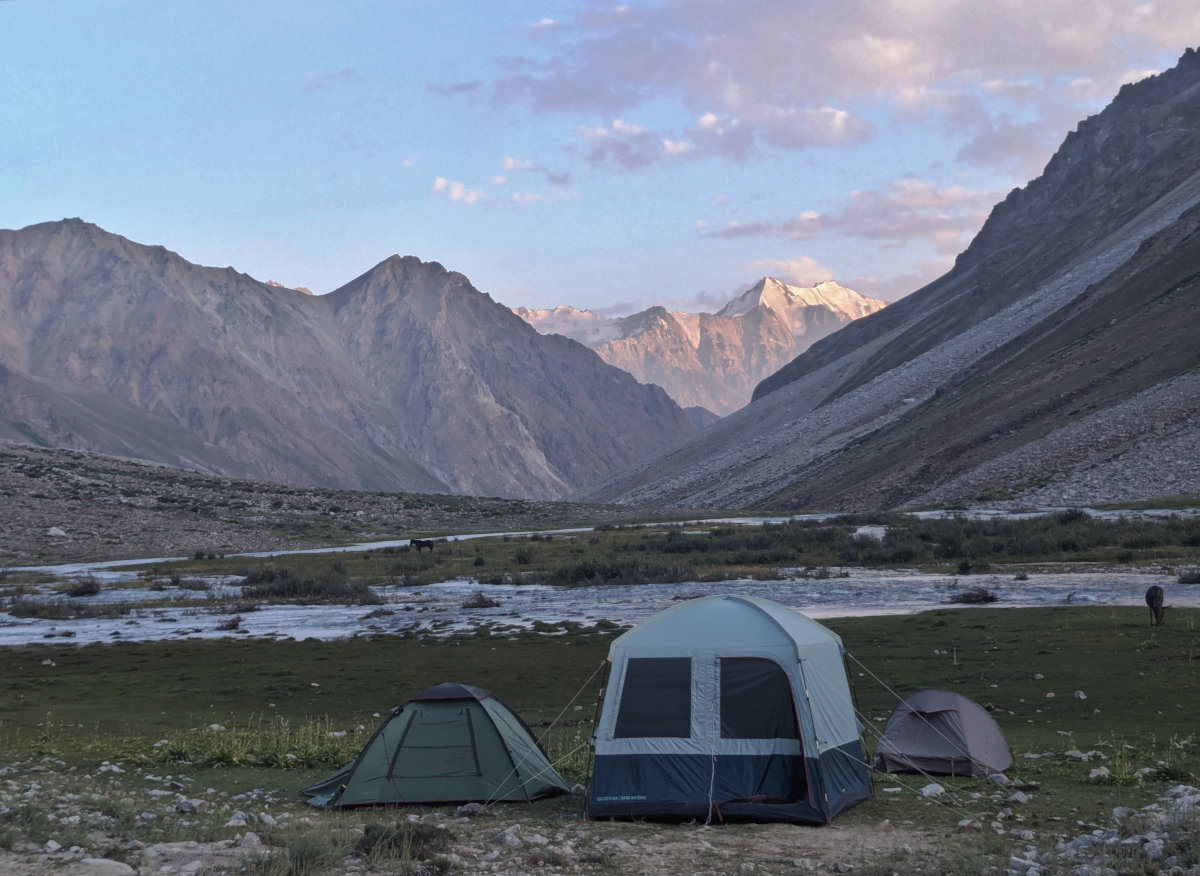
There are no fixed or designated campsites in the mountains of Tajikistan. Wild camping is permitted, which gives us the flexibility to choose the best possible camp location each day based on terrain, water availability, weather conditions and safety. The guide selects suitable spot that is as flat, sheltered and comfortable as possible.
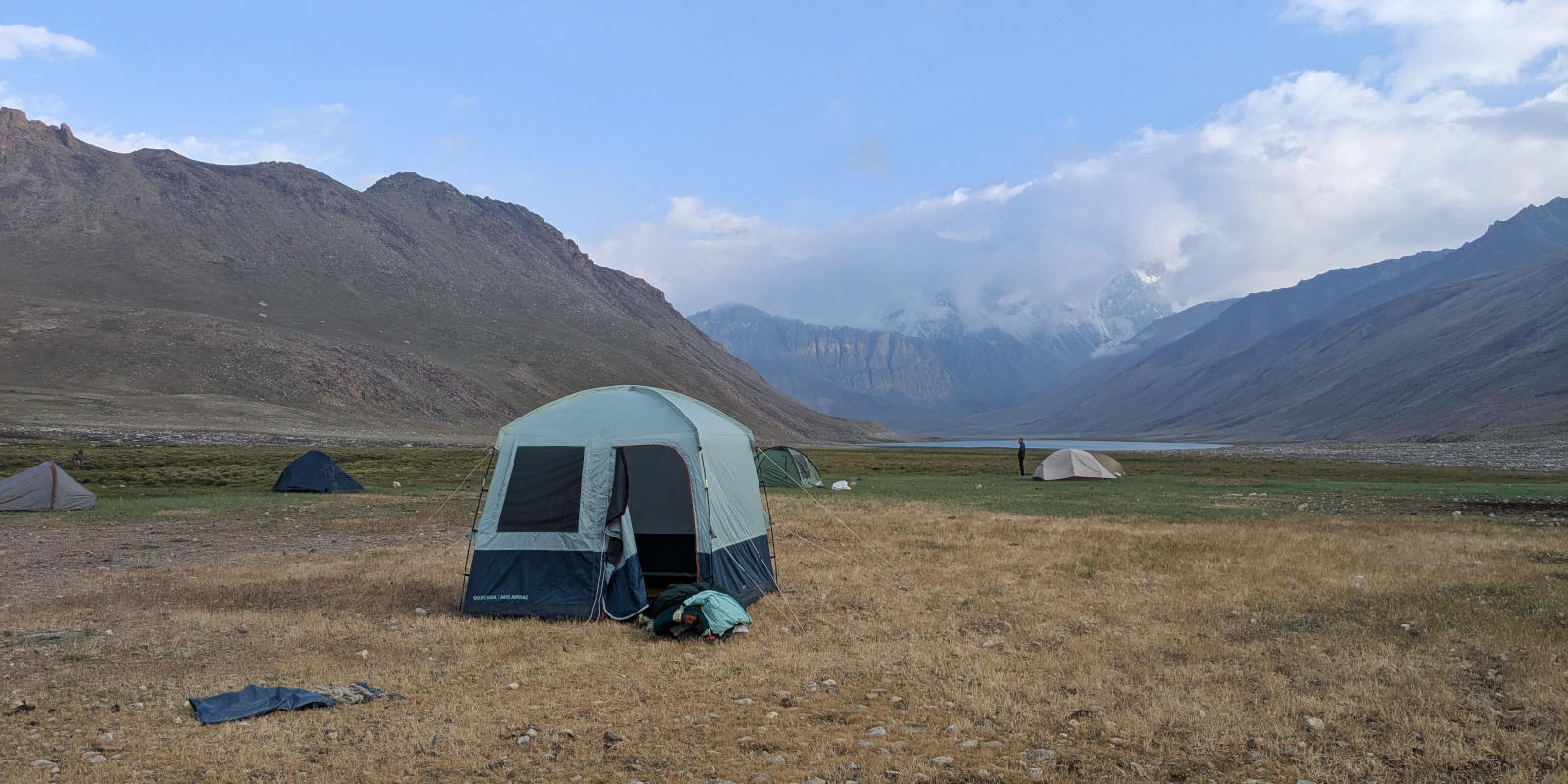
Once a location is chosen, we set up a functional base camp. This includes a toilet tent (placed over a hole dug into the ground) and a kitchen tent where the cook prepares all meals. The kitchen tent also serves as a common area where people can sit together, especially in the evenings or when weather conditions make it too cold to stay outside.
Then there are obviously the tents that we use for sleeping. Guests may bring their own camping equipment, or rent tents from us. We provide lightweight trekking tents (2-person or 3-person) suitable for use at altitude and in variable mountain conditions.
While we make every effort to ensure a comfortable camping experience, it is important to understand that this is true wilderness camping. You will be exposed to the elements and conditions can be demanding, particularly at higher elevations. During the late season throughout September, conditions get even colder and snowfall is even possible at the highest altitudes.


Food
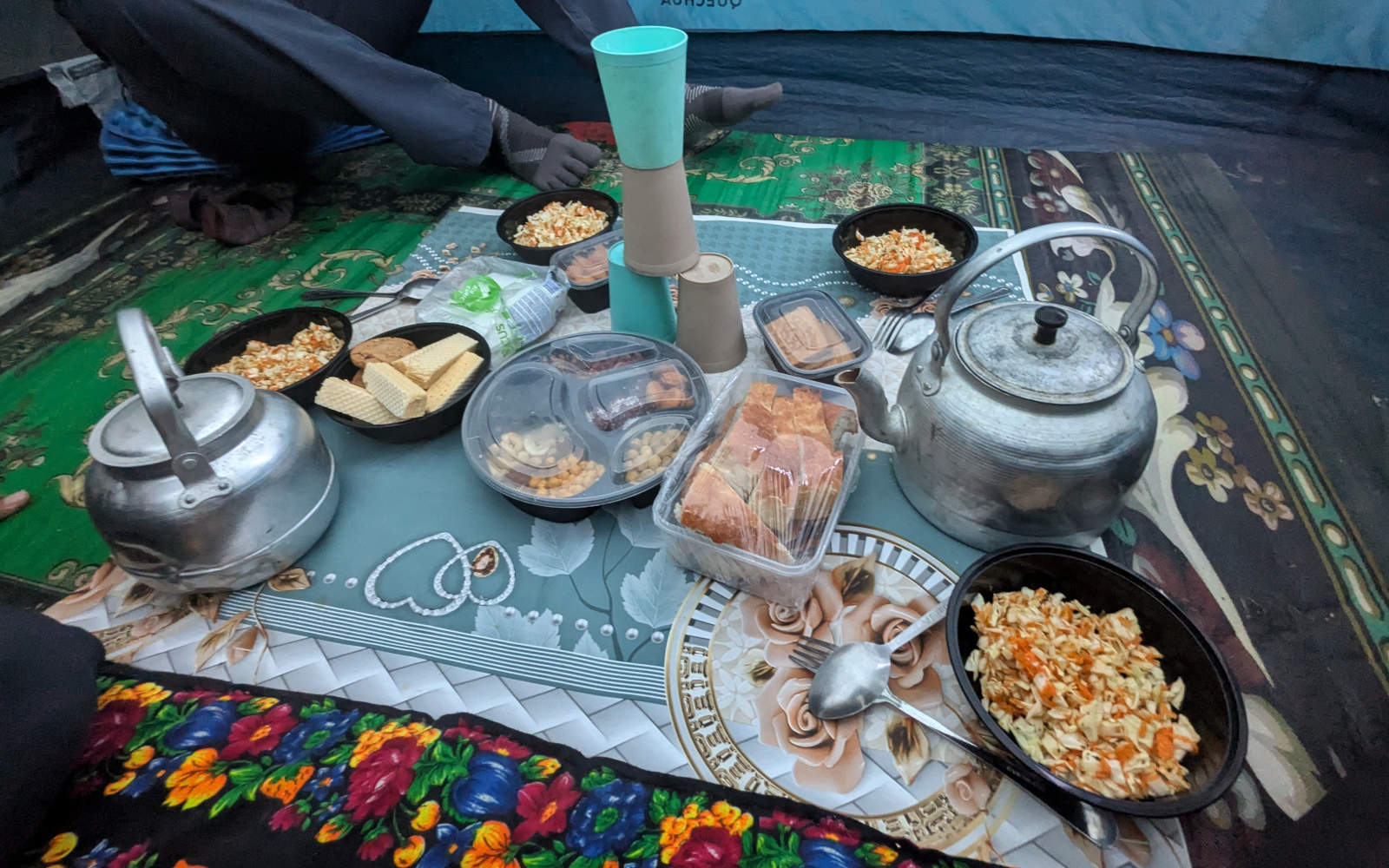
On most itineraries, a dedicated cook accompanies the group and prepares all meals at camp. We provide three meals per day: breakfast, a packed lunch to eat on the trail, and a warm dinner at camp. Meals are planned to be filling, energy-rich, and practical for trekking conditions.
Eating well during a trek is essential, as long days of walking at altitude require a high calorie intake. In remote mountain areas, preparing proper meals is more challenging than it might seem. At higher elevations, water boils at a lower temperature, which makes cooking staples like rice or pasta slower and more fuel-intensive. This is one of the reasons why having a dedicated cook is an important part of our trekking setup.
While camping, you can generally expect hearty food, mostly based on traditional Tajik dishes, adapted for mountain travel. We focus on ingredients that provide sufficient calories and energy, such as carbohydrates, vegetables and proteins, while keeping logistics realistic in remote areas.
Dietary restrictions and preferences can be taken into account if communicated in advance. Vegetarian diets are generally easy to accommodate, and we can also adapt meals for other dietary requirements where possible (like lactose or gluten intolerance). At the same time, flexibility is important when trekking in remote regions, as ingredient availability can be limited. Please inform us of any allergies or special dietary needs well before departure so we can plan accordingly.
Food variety and options may vary depending on the itinerary, altitude and access to supplies. Our goal is always to ensure that you are well nourished throughout the trek. For a better idea of typical meals and local cuisine in Tajikistan, you can also check this blog post, where we describe food in Tajikistan in more detail.
Baggage and equipment transport
To transport camping and cooking equipment, we usually rely on pack animals. This allows us to move tents, kitchen gear and food between camps without having to carry all heavy equipment ourselves. In most cases, this transport can also be used to carry part of your own personal luggage, so you only need to hike with a daypack.
However, in some regions and on certain treks, the terrain is too steep and rocky to allow the use of pack animals. In such cases, no baggage transport is possible and all personal equipment must be carried by the trekkers themselves. An example is the tough Chimtarga Pass in the Fann Mountains, where the trail conditions make animal transport impossible.
Details about baggage transport and included services vary by itinerary. Please refer to the “Included / Not Included” section on each trek page for precise information on what services are provided.

Stargazing and campfires
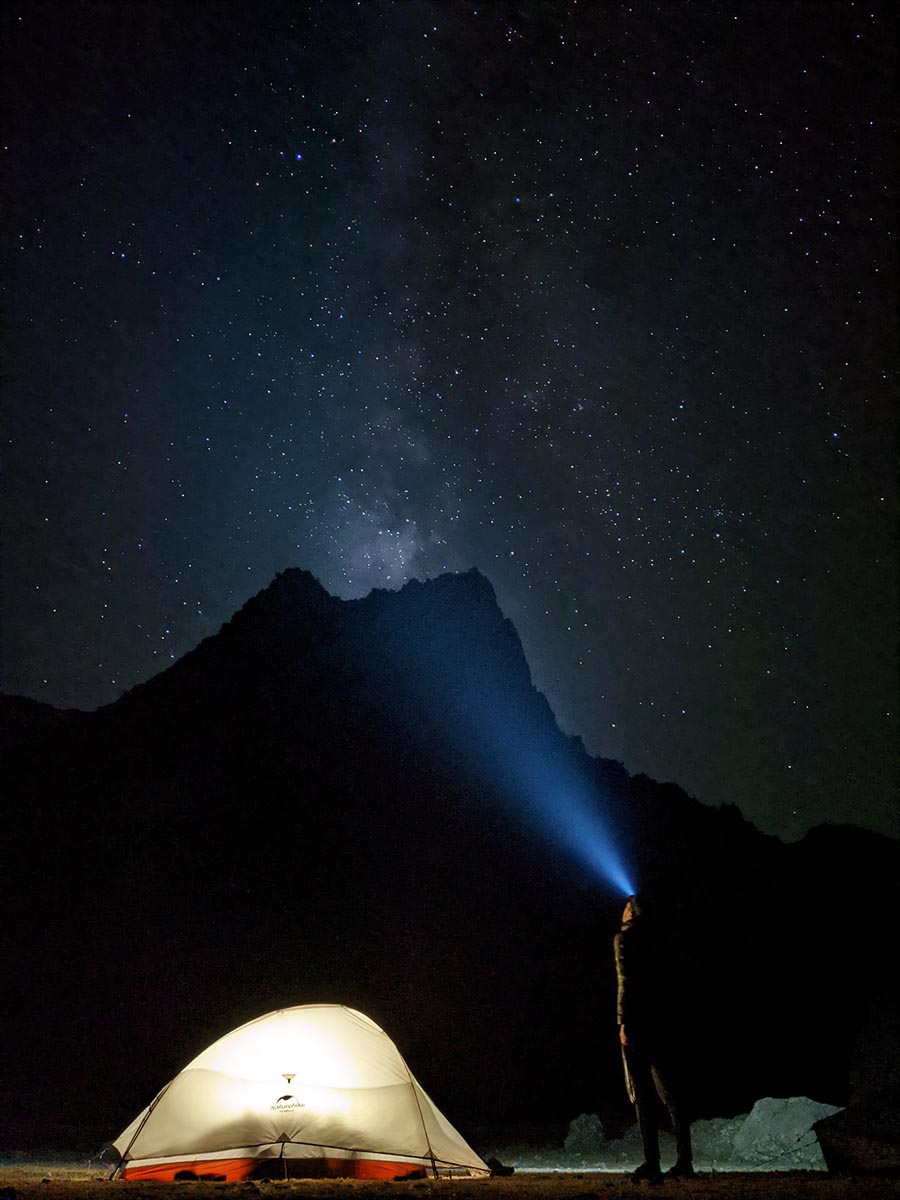
Wild camping in Tajikistan is not just a necessity, it is one of the highlights of trekking. With very little light pollution, nights in the mountains offer incredible stargazing. On clear evenings, you can expect impressive views of the Milky Way and occasionally shooting stars.
Making a campfire is allowed in Tajikistan, and when conditions permit, we can scavenge for firewood and light one at camp. Sitting around the fire after a long trekking day, sharing stories, warming up, and enjoying the quiet of the mountains is always a special moment.
Because we are fully self-supported, camps can be adapted to the group and the surroundings. Whether that means choosing a scenic spot by a river, enjoying a long evening outside, or simply going to bed early after a demanding day. In the end, this freedom and closeness to nature are what make wild camping in Tajikistan such a great experience.